
Company
 Release time:2026-07-27
 page views:
 Universal joint, also known as universal coupling, is a core angular-transmission mechanical component in industrial transmission systems. It is used to connect two transmission shafts with spatial included angles, misaligned axes or dynamically changing relative positions. While the driving shaft rotates continuously to transmit torque and motion, it can compensate angular deviation, radial offset and axial displacement between the two shafts in real time. Widely applied in machinery, automotive transmission, automated equipment, construction machinery and other fields, it serves as a key component for flexible and variable-angle transmission scenarios.
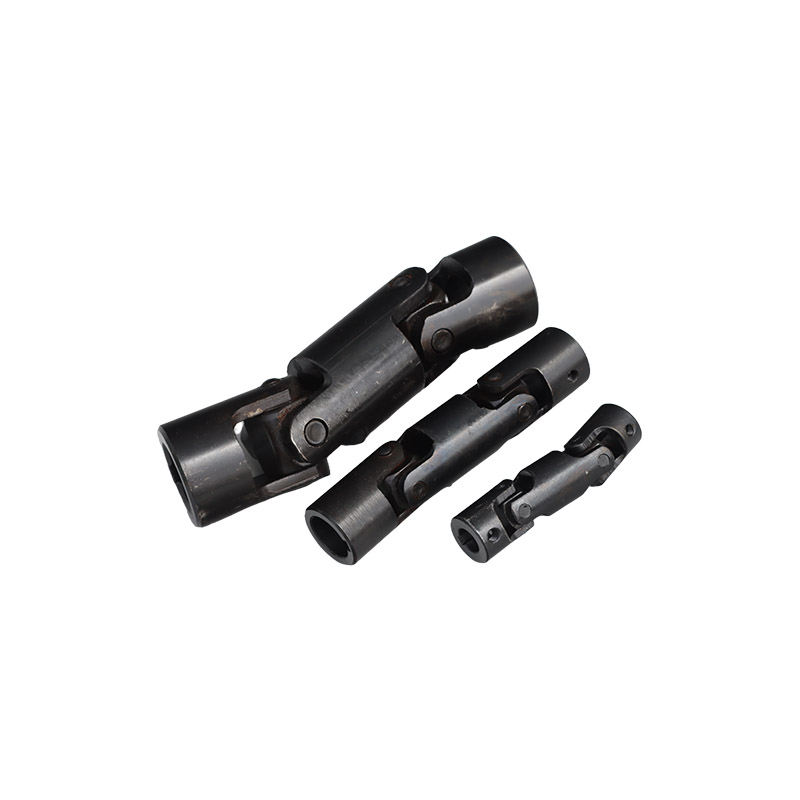
Advantages and Disadvantages of Mainstream Materials for Universal Joints
The mainstream materials of universal joints on the market include alloy steel, stainless steel, aluminum alloy and engineering plastic. Different materials fit distinct application scenarios. Alloy steel dominates heavy-duty industrial applications, while aluminum alloy and engineering plastic are commonly adopted for precision light-load scenarios. The core pros and cons of each material are listed below:
Alloy Steel (Mainstream Material for Heavy Load)
Advantages:
High strength and rigidity: After quenching and tempering heat treatment, it delivers excellent tensile strength, torsional rigidity and fatigue strength. It withstands high torque, impact loads and continuous heavy-duty operation, suitable for all kinds of heavy industrial transmission scenarios with far higher load capacity than ordinary alloys.
Superior wear resistance: Hardened core friction parts (cross spider, bearings, raceways) experience minor wear under long-term high-speed and frequent operation, extending service life for continuous-duty working conditions.
Wide temperature adaptability: When matched with suitable lubricating grease and seals, it can operate stably within -40℃ ~ 200℃ without obvious degradation of mechanical properties at high temperatures, applicable to high-temperature equipment, outdoor construction machinery and other special working conditions.
Excellent stability: Great resistance to creep and deformation. No preload relaxation or structural deformation occurs under sustained long-term loads, ensuring lasting transmission accuracy and stability.
Disadvantages:
Relatively heavy weight: High density leads to greater self-weight and higher moment of inertia. It is not ideal for lightweight precision servo systems with frequent high-speed start-stop and commutation, as it increases motor load.
Magnetic property: As a ferromagnetic material, it cannot be used in special scenarios requiring anti-magnetic interference such as MRI and semiconductor precision processing.
Higher processing cost: Complex heat treatment procedures and strict precision requirements push up production costs compared with aluminum alloy and plastic.
Aluminum Alloy (For Precision Light-load Applications)
Advantages: Low weight & low inertia, non-magnetic, easy to machine, corrosion-resistant, ultra-low moment of inertia. Suitable for high-speed precision, anti-magnetic and humid light-load working conditions, effectively improving equipment response speed.
Disadvantages: Poor strength, wear resistance and temperature resistance, weak impact resistance. Prone to creep deformation under prolonged heavy loads, only applicable to precision transmission scenarios with medium & low torque and no severe impact.
Engineering Plastic (For Low-speed Light-load Applications)
Advantages: Extremely low cost, lightest weight, low noise, maintenance-free lubrication, corrosion resistance and good insulation. Able to buffer slight vibration, suitable for low-speed, light-load, dust-free and corrosion-resistant light-duty equipment.
Disadvantages: Poor temperature resistance, low mechanical strength, prone to aging and deformation. Incapable of high speed, large torque and impact loads, with relatively short service life.
Main Types
According to transmission characteristics, structural form and working principle, universal joints are classified into four categories: rigid non-constant velocity, quasi-constant velocity, constant velocity and flexible universal joints. Each type differs greatly in structure and performance to satisfy diverse transmission requirements:
Cross-Shaft Rigid Non-Constant Velocity Universal Joint (Single Universal Joint)
Structure: Composed of driving yoke, driven yoke, cross spider, needle roller bearings and bearing caps. The cross spider acts as the core hinge component vertically connecting two sets of yokes, featuring simple structure and easy assembly & disassembly.
Features: The most widely used basic universal joint with low cost, robust structure and strong load capacity. Its theoretical maximum angular compensation reaches 45°. It features non-constant velocity transmission; the rotational speed of the driven shaft fluctuates periodically when an angle exists between the two shafts.
For practical engineering use, to avoid severe vibration and wear, the recommended continuous operating angle shall not exceed 15°. It is only applicable to low-speed scenarios with loose requirements on transmission uniformity, such as ordinary machine tools, small conveying equipment and low-speed transmission mechanisms.
Duplex Quasi-Constant Velocity Universal Joint (Double Universal Joint)
Structure: Integrated assembly of two cross-shaft universal joints connected by an intermediate short shaft.
Features: To eliminate the speed fluctuation error of a single universal joint and realize approximate constant velocity transmission, two prerequisites must be met: equal working angles of the two universal joints and coplanar yokes at both ends of the intermediate shaft.
It offers wider angular compensation range and greatly improved transmission stability. Compact structure, high load capacity and good impact resistance. Suitable for medium & low-speed transmission systems with large angular misalignment, widely used in construction machinery and general mechanical equipment.
Rzeppa Constant Velocity Universal Joint
Structure: Mainly consists of outer race, inner race, steel balls and cage. Torque is transmitted evenly via multiple groups of steel balls with precise and balanced force distribution.
Features: Theoretically achieves constant velocity transmission. The instantaneous rotational speeds of driving and driven shafts are basically synchronized with minimal speed fluctuation and transmission lag, producing negligible transmission error.
It boasts strong angular compensation capacity, high transmission precision, low noise and long service life, capable of continuous high-speed operation. As a core component for high-precision transmission, it is mainly adopted for automotive front-wheel drive transmission, precision automation equipment and high-speed servo transmission systems.
Tripod Quasi-Constant Velocity Universal Joint
Structure: Centered on two sets of tripod structures replacing traditional cross-spider design, realizing variable-angle transmission through sliding fit of pins.
Features: Allows larger axial displacement and angular deviation, high structural tolerance, strong anti-vibration and anti-offset performance to maintain stable transmission under complex working conditions.
Mostly applied to heavy-duty construction machinery and steering transmission mechanisms of large vehicles for complicated operating conditions with large displacement variation.
Flexible Universal Joint
Structure: Eliminates rigid hinge structures. Rubber, polyurethane and other elastic flexible components connect the two shaft ends, with no relative sliding friction pairs.
Features: Excellent vibration damping, buffering and noise reduction performance. It can only compensate minor misalignment angles (normally ≤3°~5°), axial and radial deviations, delivering impact-free transmission without lubrication.
However, it bears low torque and has low rigidity. Not suitable for heavy-duty or high-speed precision positioning applications, only for light-load, low-speed industrial scenarios requiring vibration and noise reduction, such as precision instruments and light automated devices.
Key Factors to Consider During Selection
Torque Load
Accurately calculate the rated working torque and peak impact torque of the equipment. The rated transmission torque of the universal joint must exceed the maximum peak torque of the equipment with sufficient safety margin reserved.
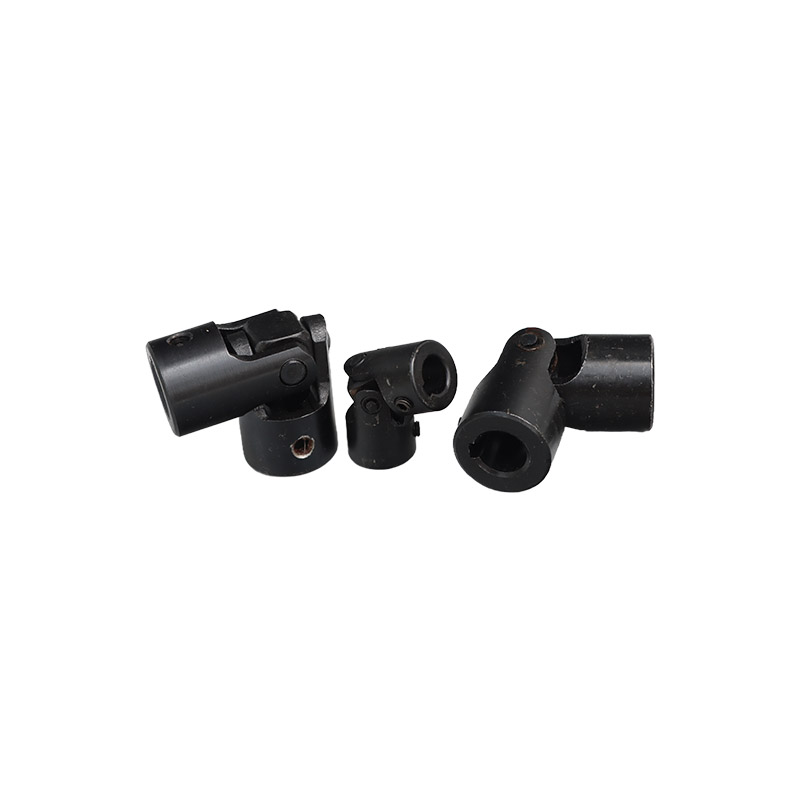
For heavy-duty and impact-load conditions, prioritize alloy steel cross-shaft and tripod universal joints; select Rzeppa universal joints for medium-low torque precision applications; aluminum alloy or flexible universal joints are choices for light-load conditions.
Operating Speed
The maximum allowable speed varies significantly among different universal joint types. Single cross-shaft universal joints are not fit for high-speed operation, which easily triggers vibration, noise and accelerated wear. Rzeppa constant velocity universal joints feature balanced structure and low friction, suitable for continuous high-speed operation. Lightweight aluminum alloy and plastic universal joints only apply to medium-low speed light-load scenarios; deformation and aggravated wear will occur at high speed.
Misalignment Compensation Requirements
Fully evaluate angular misalignment, radial offset and axial expansion of the shaft system. Single universal joints have limited angular compensation. Duplex and tripod universal joints suit large-angle and large-offset conditions. Rzeppa universal joints balance misalignment compensation and transmission precision. Flexible universal joints are only for minor deviation compensation. Match the model according to actual installation error and dynamic offset.
Transmission Precision Requirements
Precision positioning equipment, servo transmission and CNC machines demand high transmission uniformity and zero backlash. Rzeppa constant velocity universal joints must be adopted to avoid speed fluctuation and transmission error. Ordinary general transmission equipment, conveyor systems and low-speed mechanisms can adopt cost-effective cross-shaft non-constant velocity or duplex quasi-constant velocity universal joints.
Operating Environment
Select quenched & tempered alloy steel universal joints for high-temperature, heavy-load and harsh outdoor conditions; aluminum alloy universal joints for humid, slightly corrosive and anti-magnetic environments; engineering plastic or flexible universal joints for dust-free, silent light-load scenarios. Prefer lightweight low-inertia precision universal joints for systems with frequent start-stop and precision servo motion.


Hotline:
+8615066616606 hq@hqcplg.com



 current location:
  No. 188 Kunlun Road, Hongyun Development Zone, Qingyun County, Dezhou City, Shandong Province