
Encyclopedia
 current location: Home > News > Encyclopedia
 Release time:2026-08-01
 page views:
 Small Component, Great Impact: How Jaw Couplings Enable Precise & Sanitary Operation of Food & Pharmaceutical Equipment
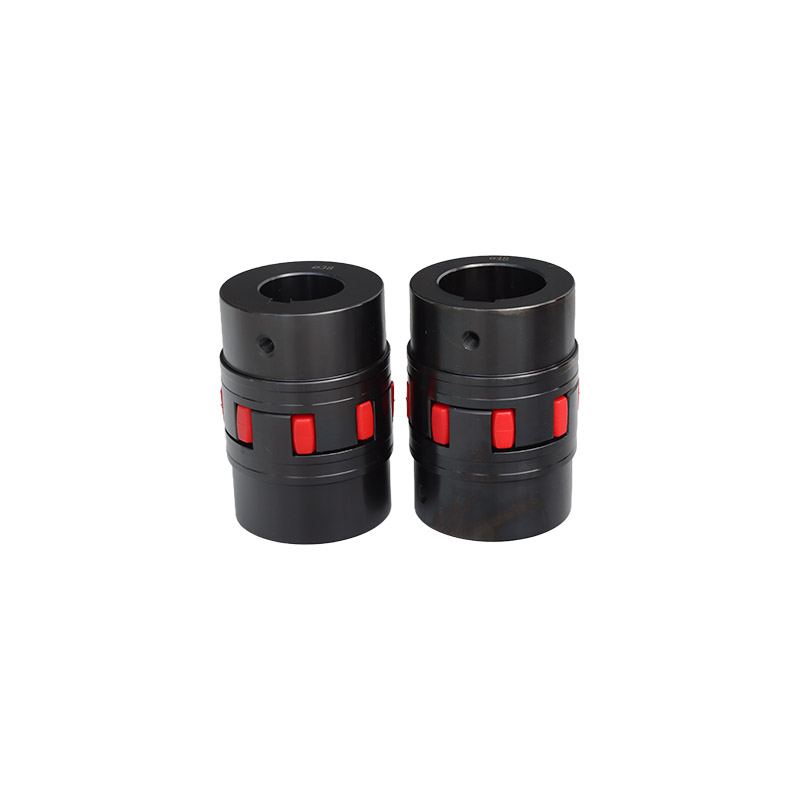
In food processing and pharmaceutical production, operational stability, sanitation and precision of equipment directly determine product quality, production safety and industry compliance. From pharmaceutical packaging, powder conveying, material mixing to food filling and extrusion molding, the transmission system of automated equipment serves as the core guarantee for efficient production lines. As lightweight flexible transmission components, jaw couplings stand out as preferred accessories for high-end automated food and pharmaceutical equipment, thanks to their unique strengths including contamination-free operation, vibration & noise reduction, precise power transmission and maintenance-free performance. Acting silently as guardians of safe and accurate production processes, they are often overlooked while people focus on large-scale production machinery. Today, we thoroughly analyze the application value of jaw couplings in food and pharmaceutical equipment.
、
I. Why Do Food & Pharmaceutical Industries Demand Extreme Standards for Transmission Components?
The food and pharmaceutical sectors fall under special compliance-oriented manufacturing. Compared with general industrial production, they impose far stricter mandatory requirements on transmission parts, which explains why conventional rigid couplings fail to suit such working conditions.
First and foremost, absolute sanitation with zero contamination. Food and pharmaceuticals are directly consumed or used by humans. The entire production process must comply with GMP standards. Transmission components must generate no oil leakage, dust or rust, and must not leach hazardous substances to prevent cross-contamination and ensure safe consumption and administration.
Secondly, precise transmission without deviation. Processes such as pharmaceutical filling, tablet compression and quantitative food dispensing demand strict synchronization of rotating speed and high transmission accuracy. Tiny transmission errors can lead to non-compliant product specifications, sharply increased defective rates and even mass quality incidents.
Moreover, stable operation with low wear. Most food and pharmaceutical production lines run continuously for 24 hours, featuring frequent start-stop cycles and forward/reverse rotation. Transmission parts need outstanding shock resistance and vibration damping capacity, alongside low noise and reduced maintenance frequency to avoid production downtime.
Lastly, adaptability to special working conditions. Certain production scenarios suffer from temperature fluctuations, minor vibrations and installation misalignment. Transmission components must compensate for slight displacement to adapt to complex operating environments. Jaw couplings fully satisfy all these industrial requirements and become core transmission components for these sectors.
II. Core Working Principle & Fundamental Properties of Jaw Couplings
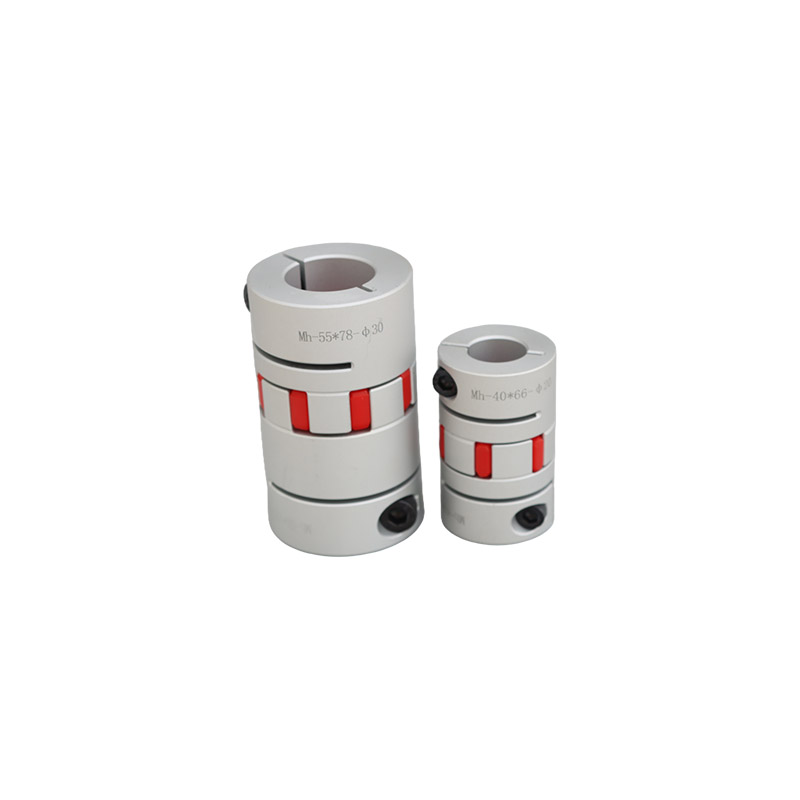
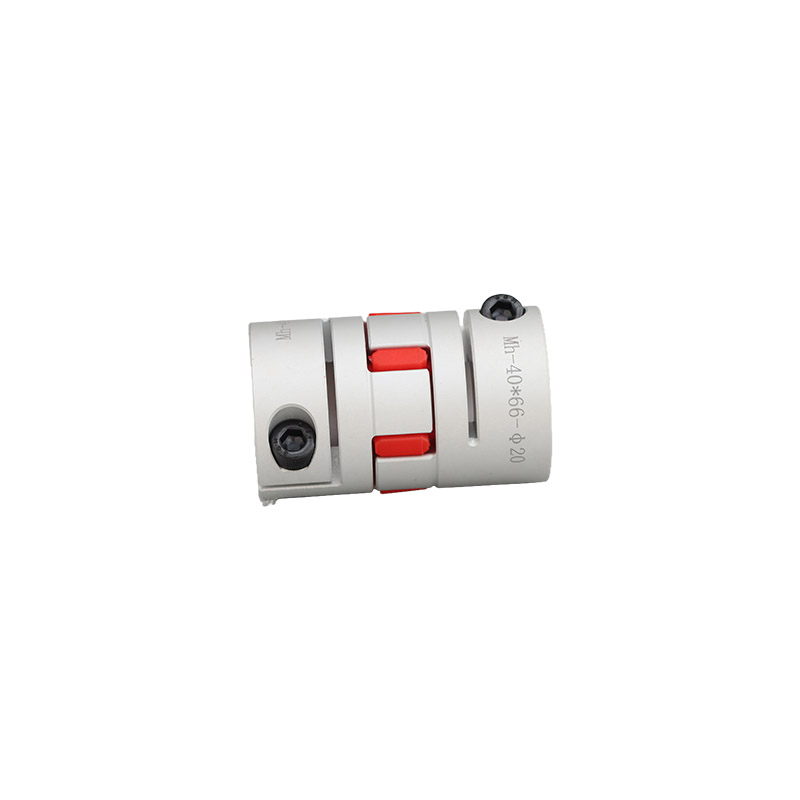
A jaw coupling is a widely adopted flexible elastic coupling. Featuring a compact and streamlined structure, it consists of two metallic hubs and an intermediate plum-shaped elastic spider. Torque is transmitted via flexible deformation of the spider. It requires no lubrication and boasts an uncomplicated transmission structure. Its core working principle relies on elastic buffering from the spider to absorb vibration and impact during power transmission. Meanwhile, it compensates for axial, radial and angular installation misalignment to achieve smooth and accurate power transfer.
Compared with traditional alternatives such as rigid couplings and pin couplings, jaw couplings possess four core properties perfectly matching food and pharmaceutical scenarios:
Sanitary and maintenance-free: No lubricant or dust generation; food-grade elastomers are suitable for cleanrooms.
Precision vibration damping: Effectively suppress vibration and shock generated during startup, shutdown and rotation reversal to guarantee rotational synchronization accuracy.
Self-adaptation to misalignment: Compensate minor displacement caused by equipment installation and thermal expansion to avoid transmission jamming.
Simple structure for easy replacement: The elastic spider can be replaced without dismantling the whole machine, facilitating maintenance and uninterrupted production.
III. Key Application Scenarios of Jaw Couplings in Food & Pharmaceutical Equipment
Benefiting from integrated advantages of sanitation, precision, stability and low maintenance, jaw couplings are extensively deployed in automated equipment covering the whole workflow of food processing and pharmaceutical manufacturing, including conveying, forming, packaging and mixing. Detailed application scenarios are listed below:
1. Pharmaceutical Packaging & Filling Equipment
Pharmaceutical machinery such as vial filling machines, capsule packaging machines, blister sealing machines and oral liquid filling lines require extremely high transmission precision. These devices must accurately control spindle rotating speed and start-stop rhythm to ensure consistent filling volume and packaging specifications for every bottle and capsule. Jaw couplings limit rotational synchronization error to an extremely narrow range, offset slight vibration from motor operation and prevent filling deviation and packaging misalignment. Meanwhile, oil-free and dust-free operation fully meets GMP sanitary production standards and eliminates risks of pharmaceutical contamination.
2. Powder & Material Conveying Equipment
Screw conveyors and transfer pumps for pharmaceutical powder raw materials, food powders and granular materials form foundational production equipment. Long-term continuous operation tends to trigger minor equipment displacement and operational vibration. Traditional couplings are prone to transmission jamming and abrasive debris shedding, which impairs conveying efficiency and contaminates materials. The elastic spider of jaw couplings adapts to minor shaft misalignment and buffers vibration generated during continuous operation. It ensures uniform and stable material conveying, prevents abrasive impurities from mixing into materials, and safeguards raw material purity and uninterrupted production.
3. Food Extrusion & Forming Equipment
For extrusion molding machines producing pastries, puffed food and medical polymer consumables, precision of twin-screw synchronous transmission directly determines finished product quality. Jaw couplings enable precise coordination between twin screws and encoders, restricting rotational synchronization error within ±0.2%. In addition, the elastic spider compensates axial displacement caused by equipment thermal expansion, avoiding uneven material density and molding defects resulting from screw misalignment, and greatly improving the yield of food products and medical consumables.
4. Mixing & Homogenizing Equipment
Machines for pharmaceutical liquid blending, food sauce stirring and emulsion homogenization demand low-speed, stable and shock-free transmission. Frequent startup, shutdown and speed adjustment easily generate transmission shock, leading to material stratification and uneven mixing. The flexible buffering property of jaw couplings perfectly absorbs transmission impact, enabling smoother stirring and homogenization, uniform material blending, and stable product taste and pharmaceutical efficacy.
IV. Material Selection Standards for Jaw Couplings Dedicated to Food & Pharmaceutical Industries
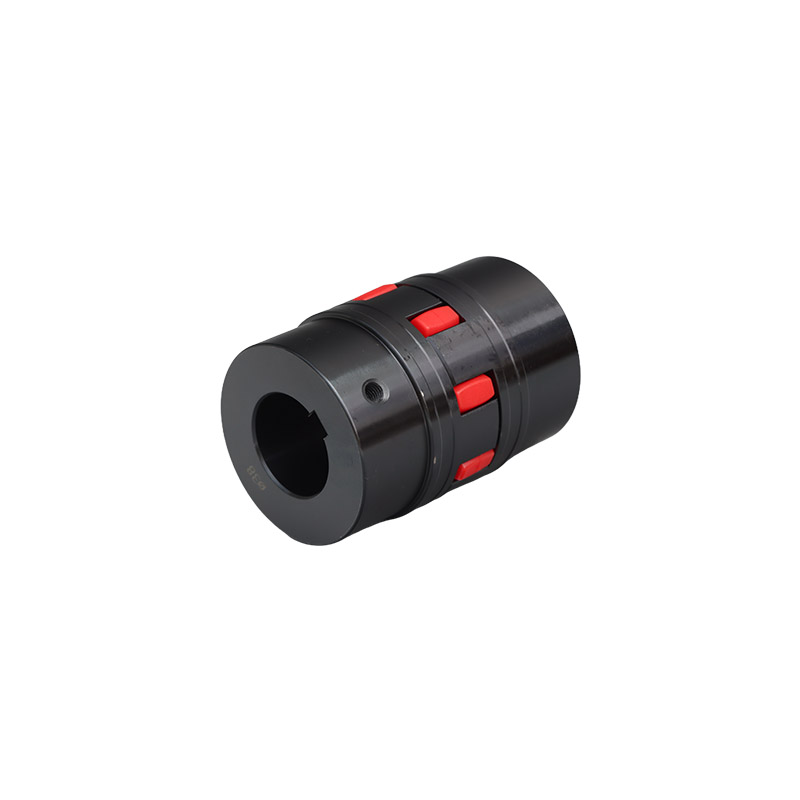
General industrial jaw couplings cannot satisfy sanitary compliance requirements of food and pharmaceutical sectors. Specialized products follow strict material standards, which are critical to production safety:
Elastic Spider: Prioritize food-grade polyurethane, silicone and other non-toxic, odorless, non-leaching eco-friendly materials. These materials feature resistance to high & low temperatures, hydrolysis and aging, withstand high-temperature sterilization and water washing, and release no hazardous substances after long-term service.
Metallic Hubs: Adopt 304/316 stainless steel for rust prevention and corrosion resistance. Surfaces are smooth without dead corners to avoid dust and material buildup, enabling convenient routine cleaning and disinfection for cleanroom environments.
Overall Manufacturing Process: Integrated molding free of pores and burrs prevents residual materials trapped in gaps that cause bacterial growth, satisfying stringent requirements for frequent cleaning and aseptic production in food and pharmaceutical industries.
V. Industrial Application Advantages & Routine Maintenance Guidelines
1. Core Application Advantages
Compared with other transmission components, jaw couplings deliver prominent strengths for food and pharmaceutical applications:
Zero contamination suitable for sanitary production: Lubrication-free, no abrasive dust, compliant materials compatible with GMP-certified cleanrooms.
High precision to guarantee product quality: Vibration-damping stable transmission and strong rotational synchronization eliminate errors in mass production.
High stability for continuous production: Anti-fatigue and shock-resistant, capable of long-term non-stop operation with ultra-low failure rates.
Low cost and easy maintenance: Simple structure and convenient replacement, no periodic maintenance required, substantially cutting equipment service costs and downtime losses.
2. Basic Maintenance Guidelines
Jaw couplings require no daily maintenance. Only basic upkeep synchronized with the disinfection schedule of food and pharmaceutical equipment is needed:
Regularly clean residual materials on surfaces to avoid dust accumulation and bacterial propagation.
Inspect the elastic spider monthly for aging, cracking or deformation, and replace components promptly when needed.
Calibrate shaft alignment during equipment overhaul; excessive misalignment accelerates spider wear.
Simple maintenance ensures long-term stable equipment operation.
VI. Conclusion: Tiny Component Bearing Great Safety, Empowering High-Quality Industrial Production
Within the pursuit-of-perfection production system of food and pharmaceutical industries, every component matters to product quality and manufacturing safety. By addressing long-standing industry pain points of conventional transmission parts including contamination risk, large displacement deviation, frequent breakdowns and difficult maintenance, jaw couplings deliver integrated performance of sanitation, precision, stability and low consumption, making them indispensable core accessories for automated food and pharmaceutical production lines.
Seemingly diminutive transmission components act as invisible guardians of production precision and safety. As food and pharmaceutical industries advance toward intelligence, enhanced sanitation and higher precision, dedicated jaw couplings tailored to these sectors will continue iterative optimization, providing solid transmission support for safe manufacturing and high-volume, high-quality production of food and pharmaceuticals.


Hotline:
+8615066616606 hq@hqcplg.com



 No. 188 Kunlun Road, Hongyun Development Zone, Qingyun County, Dezhou City, Shandong Province