
Encyclopedia
 current location: Home > News > Encyclopedia
 Release time:2026-07-29
 page views: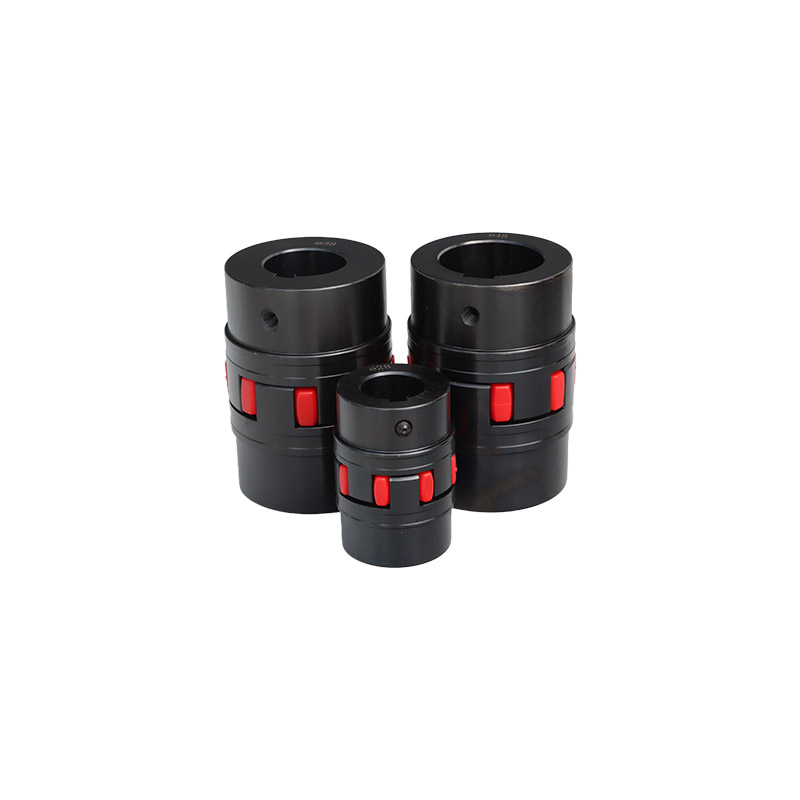
Compared with traditional rigid couplings, jaw couplings leverage the characteristics of elastic elements to effectively dampen operational vibration, absorb transient shock loads and isolate transmission noise. Under overload conditions, the elastic spider can buffer loads via deformation, providing certain overload protection for core components such as motors, reducers and working machines. In addition, it features a compact structure, small overall dimension; disassembly and assembly do not require moving equipment, and maintenance is convenient, adapting to most general mechanical transmission conditions.
It is extensively applied to centrifugal pumps, circulating water pumps, lubricating oil pumps, sewage pumps, booster pumps, metering pumps and other pump units, mainly serving to connect drive motors and pump shafts, acting as a core universal fitting for pump transmission systems.
Core application advantages: Pump assembly is prone to coaxiality deviation, and continuous vibration occurs during operation. Jaw couplings can counteract vibration and shock induced by shaft misalignment, greatly protecting vulnerable parts such as mechanical seals and bearings of pumps, reducing failures including seal leakage and bearing wear, and significantly extending the service life of pump equipment.
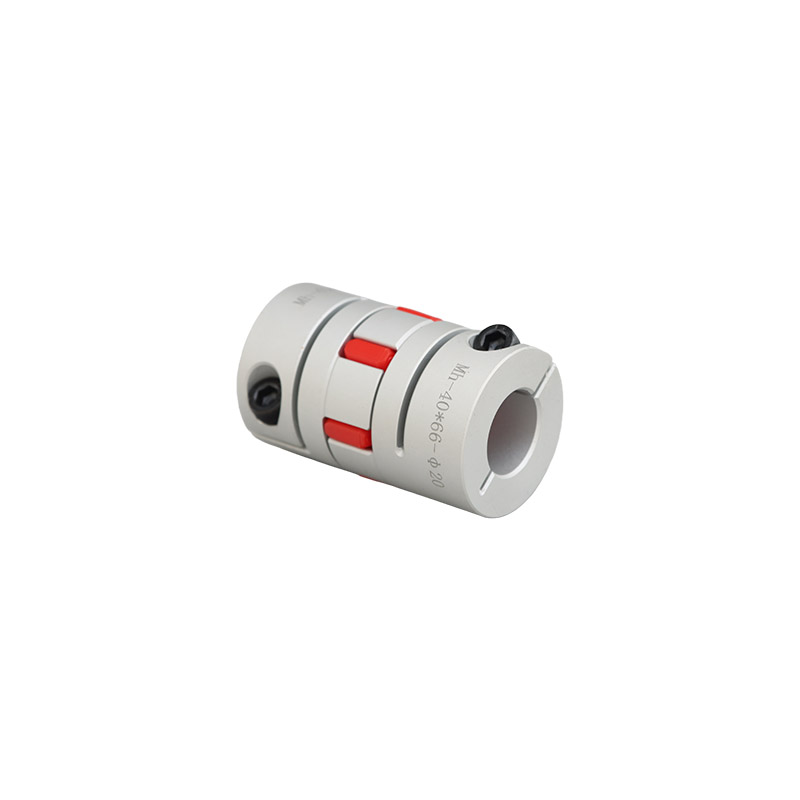
Primarily used for transmission connection of centrifugal fans, blowers, cooling tower fans, air conditioning unit fans, ventilation and dust removal fans and other equipment.
Continuous vibration tends to generate during high-speed operation of fans. Such vibration can easily propagate along transmission shafts to motors and equipment bases, triggering equipment resonance, excessive noise, base loosening and other problems. Relying on the vibration damping performance of the elastic spider, jaw couplings effectively block vibration transmission paths, lower overall equipment noise and ensure stable operation of fan equipment.
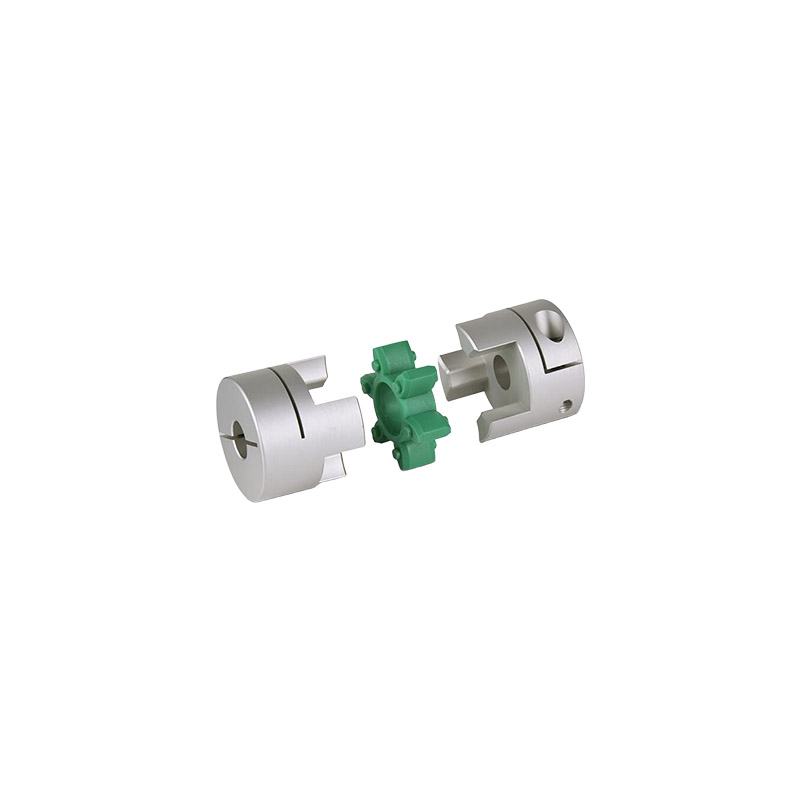
Suitable for drive transmission mechanisms of belt conveyors, roller drive equipment, chain plate conveying lines, material elevators, automatic sorting production lines, small roller conveyors and other logistics conveying equipment.
Such equipment requires long-term continuous stable operation and bears slight load shock during startup and shutdown. Jaw couplings adapt to long-duration continuous operation conditions; they can buffer minor shock loads generated by startup/shutdown and uneven material conveyance, guarantee transmission stability and reduce the wear rate of transmission parts of conveying equipment.
Commonly adopted for power connection positions of filling machines, sealing machines, labeling machines, automatic balers, slitting machines, reducers on packaging production lines and other automated packaging equipment.
Packaging equipment features frequent startup/shutdown and intermittent operation. Its transmission system is susceptible to transient load shock, which easily causes fatigue loss of gears, motors, reducers and other components. The elastic buffering property of jaw couplings can effectively mitigate startup and shutdown impact, buffer transient load fluctuations, protect precision transmission components, and secure the operation accuracy and stability of automated packaging equipment.
Mainly applied to low-speed auxiliary transmission systems including machine tool cooling pumps, lubricating oil pumps, feed auxiliary transmission mechanisms, engraving machines and auxiliary drives of small CNC equipment.
Important Note: Standard jaw couplings are not applicable to high-speed precision spindle transmission of machine tools. High-speed, high-precision spindle transmission imposes stringent requirements on coaxiality, transmission rigidity and stability. Diaphragm couplings and other high-precision transmission fittings should be prioritized to avoid machining accuracy impairment caused by elastic element deformation.
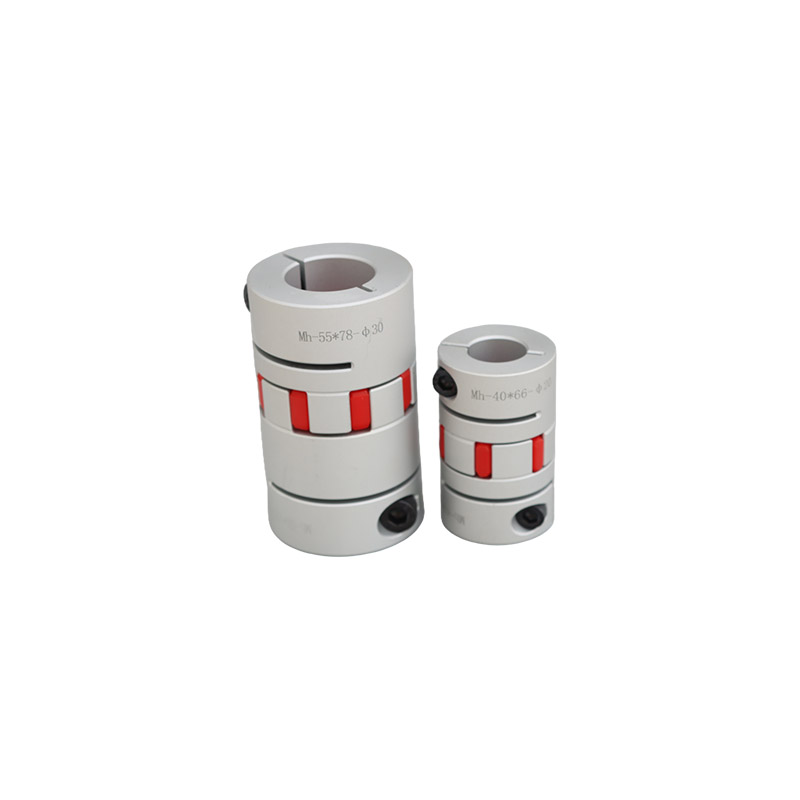
Suitable for low-speed mixing conditions such as water treatment agitators, small chemical mixing kettles, food mixers, feed mixers and powder mixing equipment.
During operation of mixing equipment, transmission loads fluctuate periodically due to changes in material concentration and mixing resistance. Jaw couplings can effectively buffer irregular load shock generated by material mixing, stabilize transmission torque, reduce load pressure on mixing shafts and drive motors, and satisfy long-term continuous low-speed mixing demands of equipment.
Applicable to general light industrial machinery such as plastic shredders, small extruders, pelletizers, printing machinery, paper rewinders and textile equipment. It meets medium-low speed and medium-load transmission requirements of such equipment and effectively buffers minor vibration and load fluctuations during operation.
Mainly matched with auxiliary transmission systems of screw air compressors, small reducer drive units and general small power equipment. Featuring compact structure and convenient installation, it satisfies the requirements of stable transmission, low noise and low wear for small power equipment.
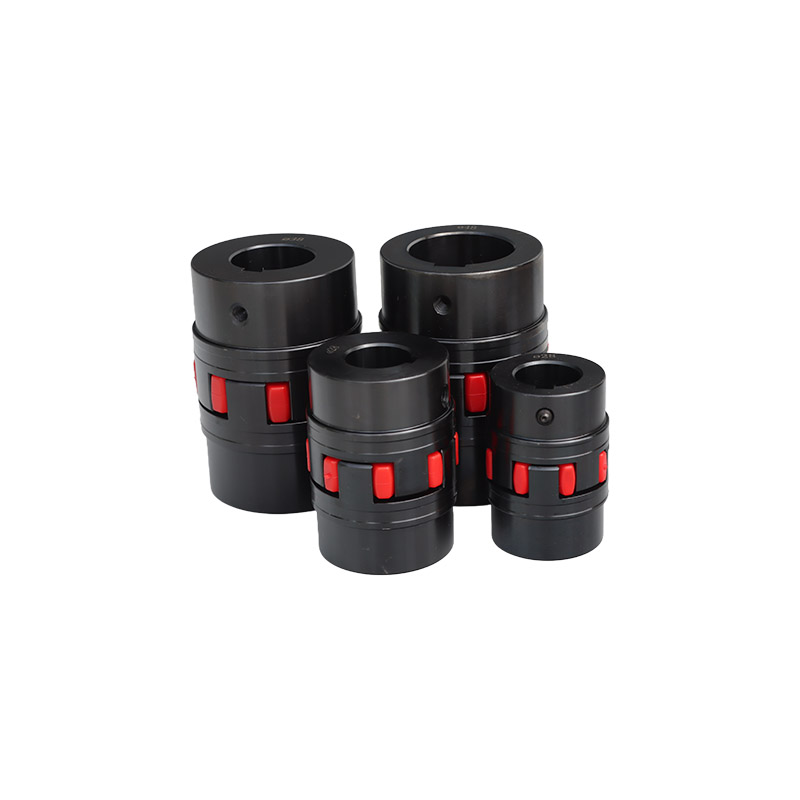
Accurate Torque Transmission: As an intermediate connecting component for power transmission, it effectively connects motors, reducers and various working equipment, stably transmits power torque, ensures normal operation of equipment transmission systems and meets power demands of equipment.
Compensation for Assembly and Machining Deviations: Machining and assembly of mechanical equipment inevitably result in coaxiality, angular and axial clearance errors. Jaw couplings can compensate for various installation deviations through elastic deformation of elastomers and prevent component jamming and wear caused by rigid transmission.
Vibration Damping, Shock Absorption, Noise Reduction and Stable Operation: Depending on the elasticity of the plum-shaped spider, it effectively absorbs vibration and shock generated by equipment startup/shutdown, load fluctuation and working condition changes, attenuates vibration of transmission systems, lowers equipment operating noise and improves overall operation stability.
Protection of Core Transmission Components: It isolates vibration and shock loads, reduces fatigue wear and impact damage to precision parts such as motor bearings, equipment seals, gears and transmission shafts, cuts equipment failure rates, extends the overall service life and reduces equipment operation and maintenance costs.
Suitable for general mechanical equipment with medium-low speed, medium torque, slight impact and long-term continuous operation. It is the preferred flexible coupling for light industry, environmental protection, pump & valve, logistics and general automated equipment.
Heavy-duty equipment with severe impact and frequent forward/reverse rotation: Crushers, large rolling mills, heavy conveyors, etc. Such equipment bears heavy load impact and drastic torque fluctuation; elastic spiders of ordinary jaw couplings are prone to damage. Serpentine spring couplings, gear couplings and other heavy-duty wear-resistant fittings shall be adopted instead.
Ultra-high speed and high-precision servo transmission conditions: Precision machine tool spindles, high-speed servo equipment, high-precision automated transmission systems. High requirements are set for transmission accuracy, rigidity and stability. Elastic deformation of jaw couplings will impair transmission accuracy, so usage is prohibited.
High-temperature conditions (ambient temperature>80℃): Conventional polyurethane spiders exhibit poor high-temperature resistance. Long-term exposure to high temperature easily triggers aging, deformation and cracking, leading to transmission failure. Special high-temperature resistant elastomer materials shall be adopted for high-temperature equipment.


Hotline:
+8615066616606 hq@hqcplg.com



 No. 188 Kunlun Road, Hongyun Development Zone, Qingyun County, Dezhou City, Shandong Province