
Encyclopedia
 current location: Home > News > Encyclopedia
 Release time:2026-07-28
 page views: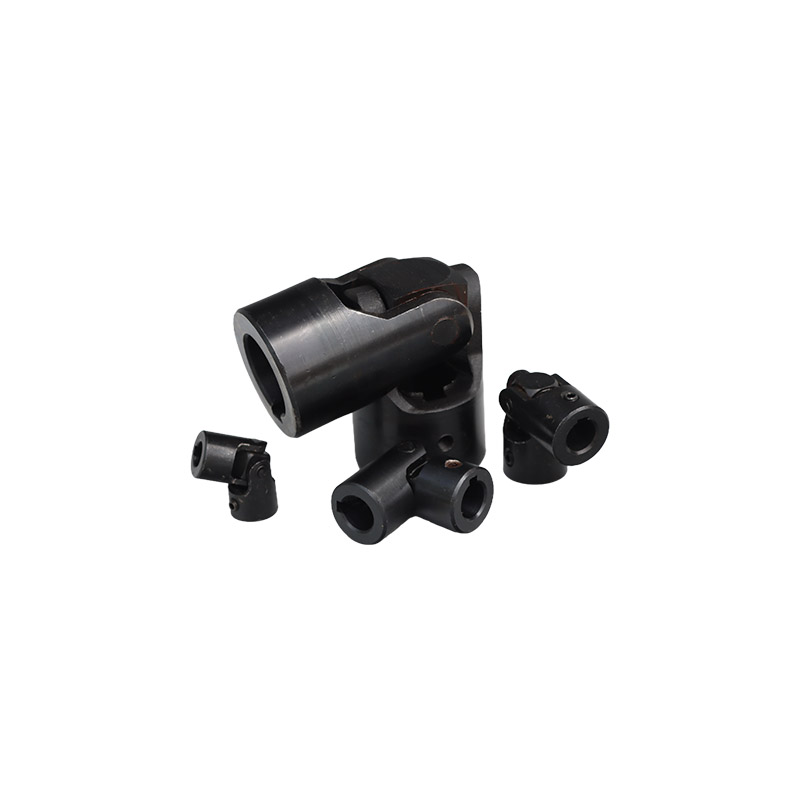
Mechanically speaking, the core function of a universal joint is to continuously and steadily transmit rotational power between two drive shafts whose axes are non-collinear, form dynamic included angles, and undergo constant relative positional changes. Acting as a "movable joint" within the transmission system, it imparts flexible adaptability to rigid mechanical power transmission. Depending on vehicle architecture, automobiles are fitted with two main types of universal joints: cross universal joints and constant-velocity universal joints, each with distinct roles.
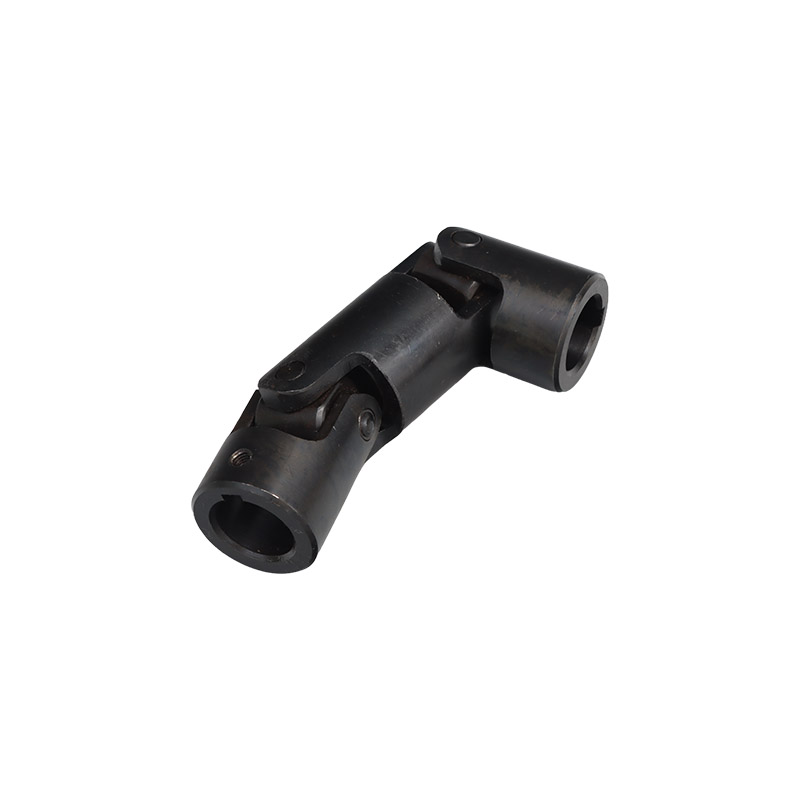
For rear-wheel-drive and four-wheel-drive vehicles, the gearbox is fixed to the vehicle frame, while the rear axle moves independently with the suspension. When travelling over potholes and undulating surfaces, the rear axle moves up and down continuously, constantly changing the angle and distance between the gearbox output shaft and rear axle input shaft. Such vehicles generally employ cross universal joints arranged in paired double universal joint configurations. This arrangement addresses an inherent mechanical characteristic of single cross universal joints: uneven rotational speed when operating at an angle. Symmetrically mounting two universal joints counteracts rotational fluctuations, ensuring uniform and stable power delivery. This proven design has long been widely adopted across the automotive industry.
Front-wheel-drive passenger cars operate under more complex working conditions. The front wheels deliver driving force while executing steering. When turning, the maximum steering angle of front wheels can reach 30 to 40 degrees; meanwhile, the suspension compresses and extends repeatedly on uneven roads. Ordinary cross universal joints cannot withstand large steering angles and will induce transmission vibration. For this reason, drive axles on front-wheel-drive vehicles are equipped with ball-type constant-velocity universal joints.
Their primary advantage is that the rotational speeds of the input and output shafts remain identical regardless of the transmission angle, completely eliminating power judder and vehicle vibration, and perfectly accommodating the dual demands of steering and driving over uneven terrain. The outer universal joint near the wheels compensates for large steering angles, whereas the inner universal joint close to the gearbox adapts to suspension telescopic displacement.
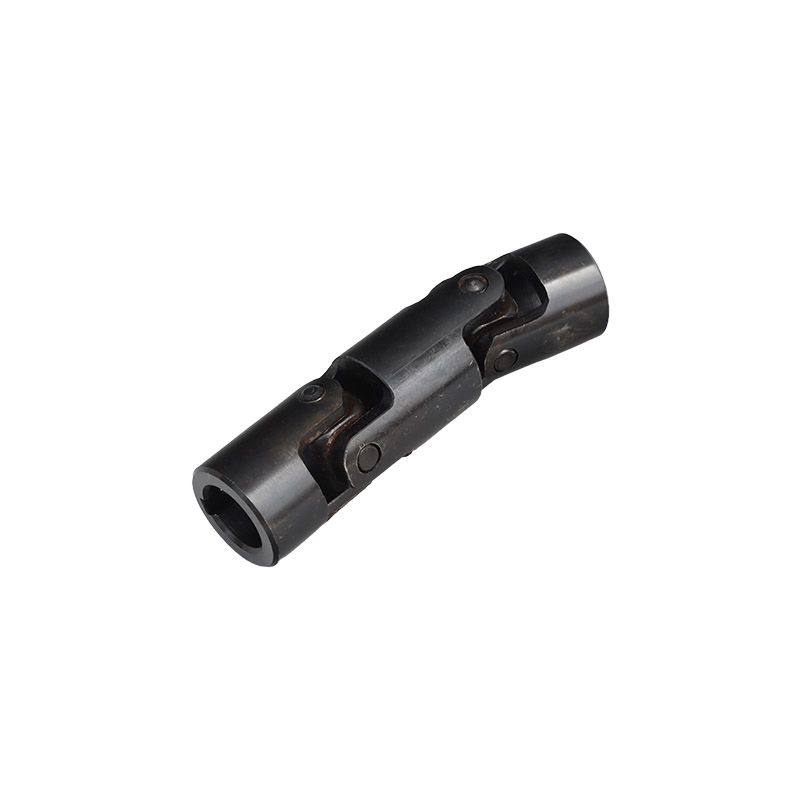
Overall, universal joints serve three irreplaceable core functions in automobiles. First, angular compensation: they continuously adapt to varying transmission angles generated during operation and overcome the limitation that rigid shafts cannot transmit power at an angle. Second, continuous dynamic torque transmission: they guarantee uninterrupted power transfer under all operating conditions including steering, bumpy travel and relative undercarriage component displacement. Third, displacement and vibration adaptation: working alongside sliding drive shaft structures, they absorb minor chassis deformation and road impacts, reducing component wear, vibration and noise in the transmission system.


Hotline:
+8615066616606 hq@hqcplg.com



 No. 188 Kunlun Road, Hongyun Development Zone, Qingyun County, Dezhou City, Shandong Province